Water irrigation
Irrigation uses controlled pulses of warmed water at a regulated pressure to float softened wax out of the canal. It is the modern successor to the metal syringe.
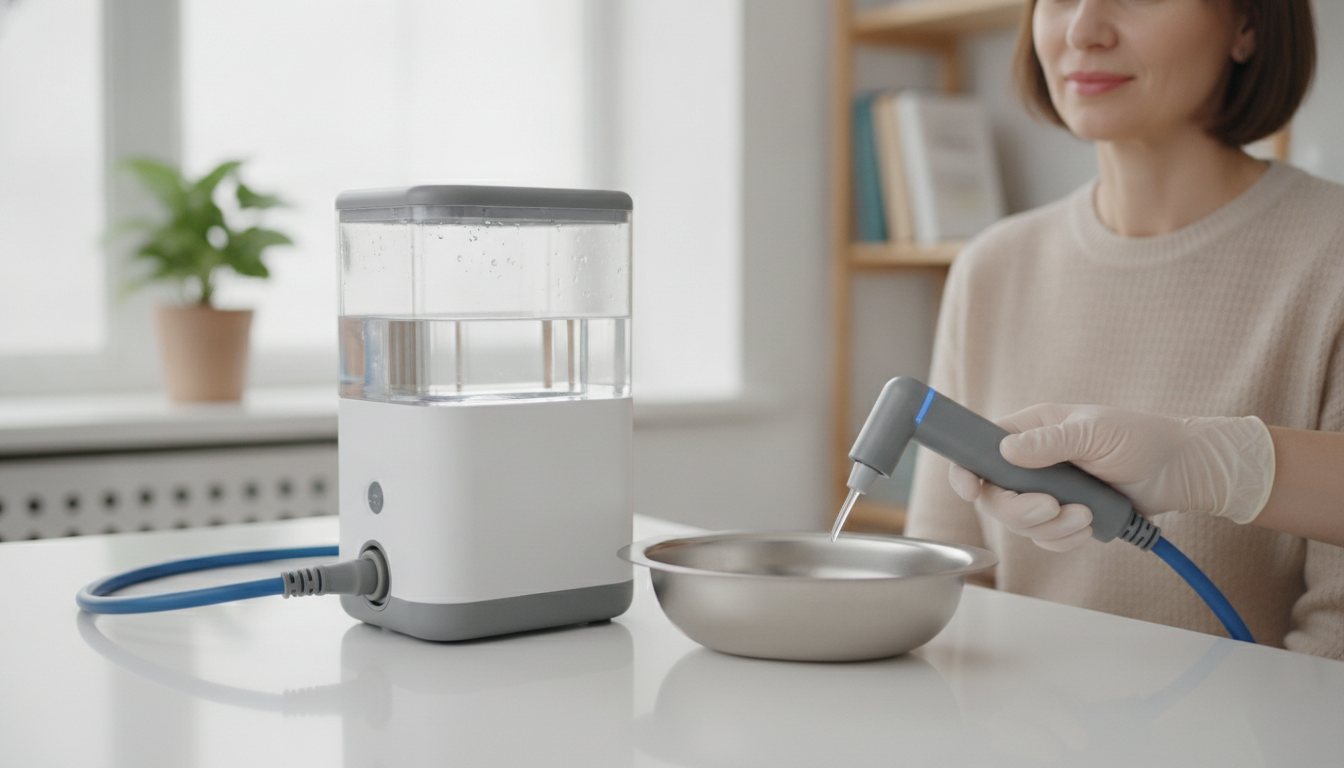
How it works
Warmed water is delivered through a fine jet tip at a pressure your clinician controls, directed along the canal wall rather than at the eardrum. The water works behind the wax and floats it out into a collecting basin. Both ears are re-examined afterwards and the canals dried.
Not the same as old-fashioned syringing
Traditional syringing used a hand-pumped metal syringe with no pressure regulation, which is why it fell out of NHS use. Modern irrigation units cap the pressure, control the water temperature, and pulse rather than push — a fundamentally different and far safer procedure.
When it suits
Irrigation works best on softer or recently formed wax, and on ears with no history of perforation, grommets, ear surgery or recurrent infection. If your examination rules it out, microsuction is used instead at no difference in price.
Preparing your ears with drops
Irrigation works by floating wax out, so softening it first genuinely matters. For most people, olive oil drops two or three times a day for three to five days before the appointment is ideal; sodium bicarbonate drops from a pharmacy are an alternative if you prefer. Warm the bottle in your hands, lie on your side, fill the canal and stay put for five minutes. Do not worry if your hearing gets temporarily worse during the oiling period; that usually means the wax has swollen and softened, which is exactly what irrigation needs. If you cannot manage drops, come anyway, and the method will simply be chosen around what is found on the day.
Aftercare and what to expect afterwards
Your ears are dried and re-examined before the equipment is packed away, so you leave with a clear picture of what was found. A slight watery feeling or mild echo for an hour or two is normal while the last moisture evaporates. Keep the canals dry for the rest of the day, avoid swimming for twenty-four hours, and do not push cotton wool deep into the ear; a loose piece at the entrance is fine if water bothers you. Mild itchiness for a day or so is common. Pain, discharge, spinning dizziness or a sudden hearing drop after irrigation are not normal, and you should contact us or your GP promptly if they occur.
Who irrigation is not for
Some ears should never be irrigated, and part of the pre-treatment examination exists to catch them. Water is not used where there is a known or suspected perforation, grommets or other ventilation tubes, a mastoid cavity or previous major ear surgery, an active infection or discharging ear, or a history of the eardrum being damaged by syringing in the past. It is also avoided where a previous irrigation caused pain or dizziness. None of this means you cannot be treated; it simply means microsuction or manual removal is used instead, at the same £75 visit price, with no need for a separate appointment.
Common misconceptions
The most persistent myth is that all water-based wax removal is the discredited "syringing" of decades past. Modern electronic irrigation is the method NICE names as appropriate for community wax removal; it is the hand-pumped metal syringe that guidance moved away from. A second myth is that irrigation "washes out the ear's protection" for good. Wax regrows continuously, and a healthy canal replaces its protective coating within days. Finally, some people believe water in the ear always causes infection. Infection risk comes from trapped moisture in a blocked or damaged canal, which is why ears are examined first, treated at controlled temperature, and dried and checked afterwards.
Good to know
- Water warmed to body temperature
- Pressure-regulated and pulsed, not pumped
- Best for softer or oiled wax
- Not used on perforations, grommets or post-surgical ears