Ear health check
Every appointment begins with a full examination of both ears — included as standard with every home visit.
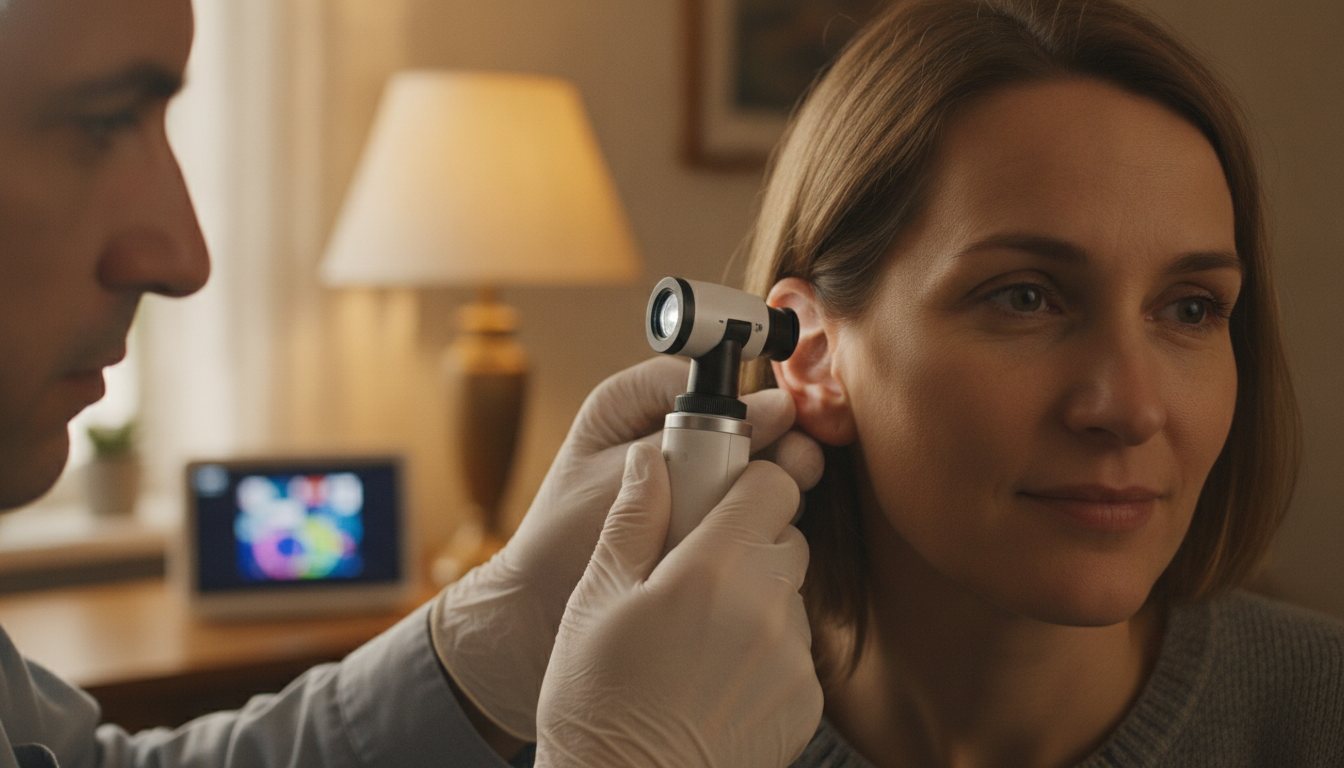
What is checked
The outer ear, the full length of the canal and the eardrum itself. Your clinician is looking for wax volume and consistency, skin condition, signs of infection or inflammation, perforations, grommets and any foreign material.
What you are told
A plain-English description of what is there, whether it needs treating, and what to do about it. If nothing needs removing you will be told so directly, with advice on keeping your ears clear.
Referral when needed
If the examination shows something outside the scope of wax removal — an infection, a suspected perforation, unexplained hearing loss — you will be advised to see your GP, with a written summary of the findings if you would like one to take with you.
Why regular checks are worth having
Wax builds slowly, and hearing loss from a gradually blocking canal creeps up so gently that family members often notice before the person does. A periodic examination catches a canal that is silting up before it blocks completely, which matters most for the people wax affects most: hearing aid users, people over sixty, swimmers, workers who wear earplugs or ear defenders all day, and anyone with naturally narrow or wax-prone canals. Many patients settle into a rhythm of a check every six to twelve months. Because the examination is included in every visit, a check that finds nothing to treat still leaves you knowing, rather than guessing, what is going on in your ears.
What the check is not
An ear health check is a clinical examination of the canal and eardrum; it is not a full hearing test. If your ears are clear but your hearing is still poor, the right next step is audiometry with an audiologist or a GP referral, and you will be pointed that way rather than sold anything. The check also cannot see beyond the eardrum, so conditions of the middle and inner ear, such as glue ear or age-related hearing loss, can only be suspected from their signs, not diagnosed on the spot. Knowing the limits of the examination is part of doing it honestly, and it is why findings sometimes come with a recommendation to see your GP.
Common misconceptions about ear wax
Wax is not dirt and its presence is not a hygiene failure. It is a normal secretion that waterproofs the canal, traps dust and debris, and carries them outward as the skin naturally migrates. Some people simply produce more, or produce a drier type that moves poorly; narrow or hairy canals, hearing aids and earplugs all slow the exit route. A completely wax-free canal is neither achievable nor desirable. The problem is only ever excess or impaction, and the sensible response is periodic professional checking and removal when needed, not daily scrubbing, cotton buds or ear candles, all of which make genuine problems more likely rather than less.
Good to know
- Included with every home visit
- Both ears examined, every time
- Plain-English findings and advice
- Written summary for your GP on request