Hearing aid wearers
Hearing aids trap wax against the canal wall. Regular clearance keeps them fitting properly and stops the whistling.
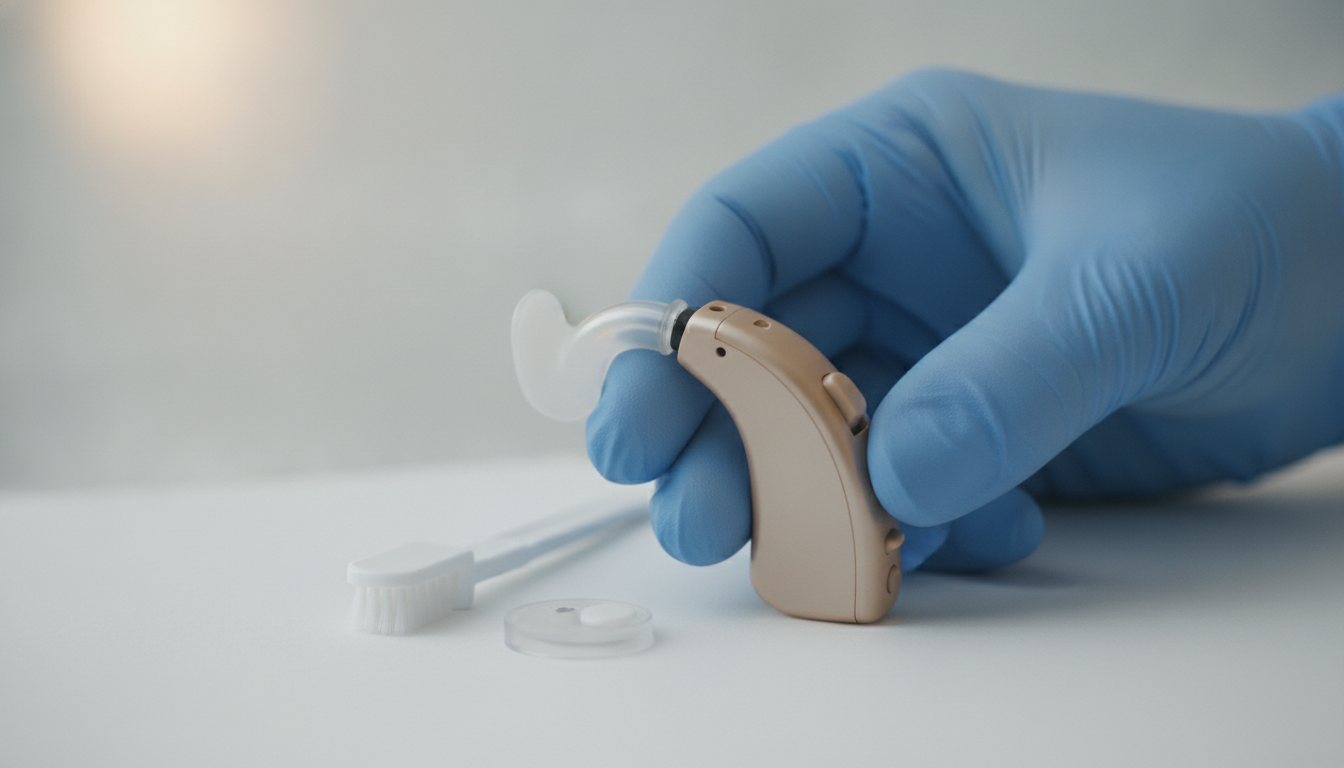
Why wax builds up faster
A mould or dome sitting in the canal blocks wax's natural migration outward. It accumulates behind the device and presses against the eardrum, which is why aid users typically need clearing more often than other people.
Signs it is time
Feedback and whistling, an aid that no longer sits comfortably, sound that has become muffled despite a fresh battery, or wax guards clogging within days rather than weeks.
Keeping on top of it
Many aid users book a visit every six to twelve months. If you would like a reminder when you are due, say so at your appointment and one will be sent.
Before your appointment
Bring, or have to hand, everything you put in your ears: the aids themselves, spare domes, wax guards and your cleaning kit if you have one. Leave the aids out for an hour or so before the visit where practical, as canal skin marked by a mould can hide detail from the examination. If your aids feel blocked, resist the temptation to poke at the receiver or the canal with anything; a surprising number of "dead" receivers arrive damaged by biro tips and paperclips. Olive oil drops in the days beforehand are fine and helpful, but use them after taking the aids out for the evening, never with the aids in place.
What happens at the appointment
The visit runs like any home appointment, with additions specific to aid users. Both canals are examined with your history in mind, wax is removed with the method that suits your ears, and microsuction is usually preferred because it leaves the canal dry for the aids to go straight back in. Your aids are then checked over for wax in the domes, guards, tubing and microphone ports, and you can watch how the guards are changed so you can do it confidently yourself. Before leaving, the aids go back in and you confirm the fit and sound are right, because a visit that ends with working aids is the actual point.
Looking after your ears and aids between visits
A few habits stretch the time between professional clearances. Wipe each aid or mould daily with a dry cloth or the brush supplied with it, and change wax guards as soon as sound dulls rather than on a fixed schedule. Let your ears breathe when you can, for example leaving aids out for a while in the evening. Do not sleep in aids unless advised to, and never use cotton buds to "clean the way" for a mould. If you use a drying pot or dehumidifier, keep using it, as moisture and wax together are what really clog receivers. None of this stops wax; it just slows the clock.
When the problem is the aid, not the ear
Not every muffled aid is a wax problem, and it helps to know the difference. If your ears are examined and found clear but the aid still sounds weak, distorted or dead after a fresh battery or full charge and a new wax guard, the fault is in the device, and the right destination is your audiologist or the dispenser who fitted it, not another wax appointment. Likewise, whistling that persists with clear canals can mean the mould no longer fits and needs re-making. You will always be told plainly which side of the line your problem sits on, because sending you to the right professional costs nothing and saves you weeks.
Good to know
- Microsuction preferred — keeps the canal dry
- Aids checked for wax at the same visit
- Six-monthly reminders available
- Especially helpful before a re-fit or audiology appointment