Manual removal
Manual removal uses fine instruments under direct vision to lift wax out — often the quickest option, and frequently used alongside suction.
How it works
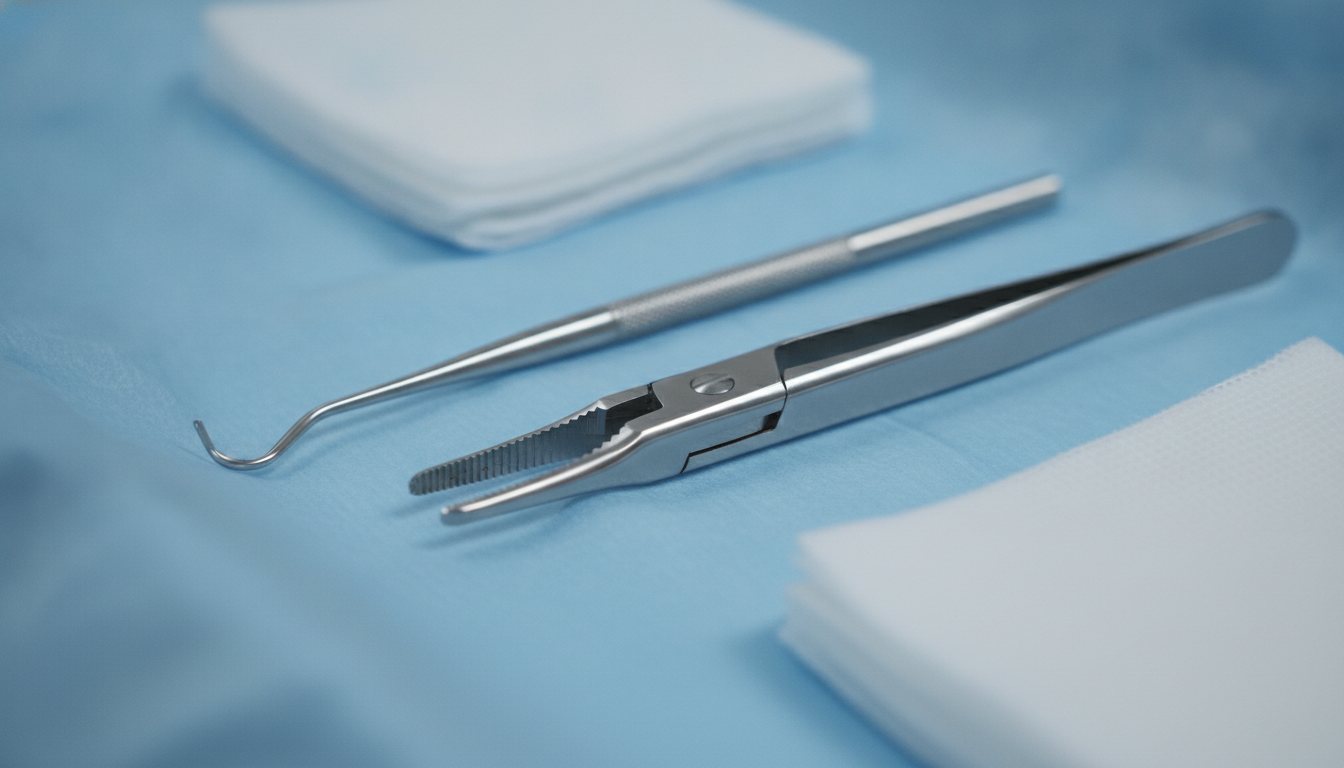
With magnification and a good light, your clinician uses a Jobson Horne probe, a wax loop or crocodile forceps to lift wax away from the canal wall and draw it out in one piece. It is precise, silent, and takes seconds when the wax is positioned well.
When it is used
Manual removal suits wax sitting in the outer third of the canal, hard plugs that have separated from the skin, and foreign material such as a lodged cotton bud head. It is also used to finish a microsuction appointment when a stubborn fragment remains.
Safety
Instruments are only ever used where the clinician has a clear, uninterrupted view of the wax and the canal. If the view is not clear, the method is changed — instruments are never worked blind.
How to prepare
Manual removal needs the least preparation of any method, because it works best on wax that is firm enough to grip. If you have already been oiling for another appointment, that is not a problem; it simply means suction may be used to finish the job. Avoid cotton buds, ear candles and home "ear scoops" bought online in the days before your visit, as all three tend to push wax deeper and inflame the canal skin, which makes instrument work slower and less comfortable. Have your usual chair, light and plug socket ready as with any visit, and mention any previous ear surgery or discomfort when booking.
What it feels like
Manual removal is the quietest option on offer: no suction noise, no water, just a fine instrument working under direct vision. Most people feel a light touch or a slight tugging sensation as a plug separates from the canal wall, and many feel almost nothing at all. The canal entrance is sensitive skin, so you will know something is happening, but it should never hurt; if anything feels sharp the clinician stops and changes approach. Because it is silent, it is often the preferred starting point for people with noise sensitivity, some children, and anyone made anxious by the sound of suction.
The cotton bud problem
A large share of the wax seen at home visits has been made worse by the very thing meant to remove it. Cotton buds sweep a little wax out of the entrance and ram the rest down the canal, compacting it against the eardrum where it can no longer migrate out naturally. They also strip the canal's protective coating and can scratch the skin, inviting infection. The same applies to hair grips, matchsticks, keys and the camera-tipped scoops sold online. The NHS advice is simple: nothing smaller than your elbow in your ear. Professional manual removal exists precisely because instruments belong in trained hands with a clear view.
When manual removal alone is not enough
Instruments are the right tool for accessible, well-formed wax, and the wrong tool for everything else. Soft, smeared or very deep wax gives nothing to grip, and working instruments far down the canal without suction risks touching the eardrum, so in those cases the clinician switches to microsuction or irrigation rather than persisting. Very hard wax welded to the canal wall may need a few days of oil before any method will shift it, in which case you will be told plainly and a follow-up arranged. The visit price covers whichever combination of methods your ears actually need, decided by examination rather than by what was booked.
Good to know
- Silent — no suction noise
- Very quick where wax is accessible
- Often combined with microsuction
- Single-use or fully sterilised instruments