Microsuction
Microsuction removes wax with gentle suction under magnification. No water, no pressure against the eardrum, and a clear view of the canal throughout.
How it works
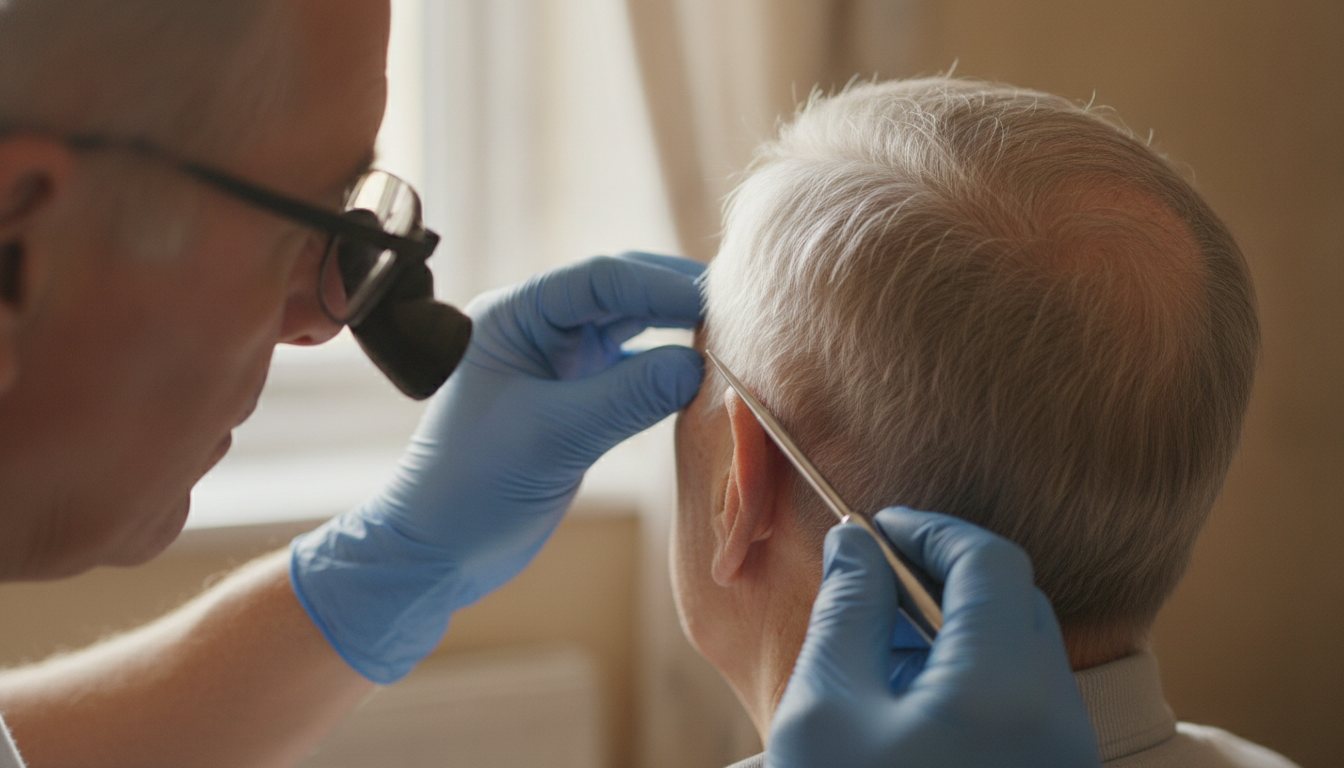
Your clinician examines the canal with an otoscope, then uses head-worn magnification and a fine sterile probe attached to a low-pressure suction unit. The wax is drawn out in pieces rather than pushed inward. Because nothing is introduced into the ear, the canal stays dry and the eardrum is never loaded with pressure.
Why it is usually first choice
Microsuction is the method recommended by ENT departments and is the only option suitable for many ears: perforated eardrums, grommets, previous mastoid surgery, a history of repeated infections, or ears that have reacted badly to syringing in the past. It also works on wax that is too hard or too dry for irrigation to shift.
What it feels like
You will hear the suction, which is loud in the way a hairdryer close to your head is loud, and you may feel a light tickling or tugging. It should not hurt. Treatment pauses the moment you ask, and most people find the relief immediate once the blockage clears.
How to prepare
No preparation is strictly required, but two or three days of olive oil drops beforehand can make a real difference with very hard or long-standing wax. Use ordinary pharmacy olive oil drops or spray, two to three times a day, lying on your side for a few minutes after each application so the oil reaches the blockage. Do not use cotton buds to "help it along", as they compact wax deeper and make removal slower. If you wear hearing aids, leave them out for an hour or so before the visit where practical. Otherwise, carry on as normal: eat, drink and take your usual medication, and have a seat with a back ready near a plug socket.
Aftercare
Most people need no aftercare at all beyond enjoying being able to hear again. The canal skin can feel slightly sensitive or itchy for a day or two after a large plug is removed; leave it alone and it settles. Avoid poking anything into the ear, and try to keep the canal reasonably dry for twenty-four hours, for example by tilting your head in the shower. Hearing can seem oddly loud at first because the ear is recalibrating after weeks of muffling; this passes quickly. If you develop pain, discharge or a marked drop in hearing in the days after treatment, contact us, your GP or NHS 111 rather than waiting.
Who it is not suitable for
Microsuction is the most widely tolerated method, but it is not automatic for everyone. A small number of people find the suction noise genuinely distressing, including some with hyperacusis, severe tinnitus or sound sensitivity, and for them manual removal or irrigation may be discussed instead. Ears with an active, painful infection are usually examined but not instrumented until the infection has been treated. Dizziness can occasionally be triggered by the cooling effect of suction, so anyone with significant balance problems is treated slowly and with breaks. If examination on the day suggests the ear needs a GP or ENT opinion first, that is what you will be told, honestly.
What the guidance says
The NICE guideline on hearing loss in adults (NG98, 2018) recommends that earwax removal should be available in primary and community care when wax is contributing to hearing loss or other symptoms, and names microsuction and electronic irrigation as appropriate methods carried out by trained practitioners. The same guideline advises against old-fashioned manual syringing. NICE also advises people not to try removing wax themselves with cotton buds, and there is no credible evidence that ear candles remove wax at all. In short, national guidance supports exactly this kind of community-based, properly performed removal, and cautions against the home methods that cause most of the damage clinicians see.
Good to know
- Suitable for perforations, grommets and post-surgical ears
- Completely dry — no water in the canal
- Effective on hard, impacted wax
- Typically five to ten minutes per ear