
Understanding your ears and foreign objects
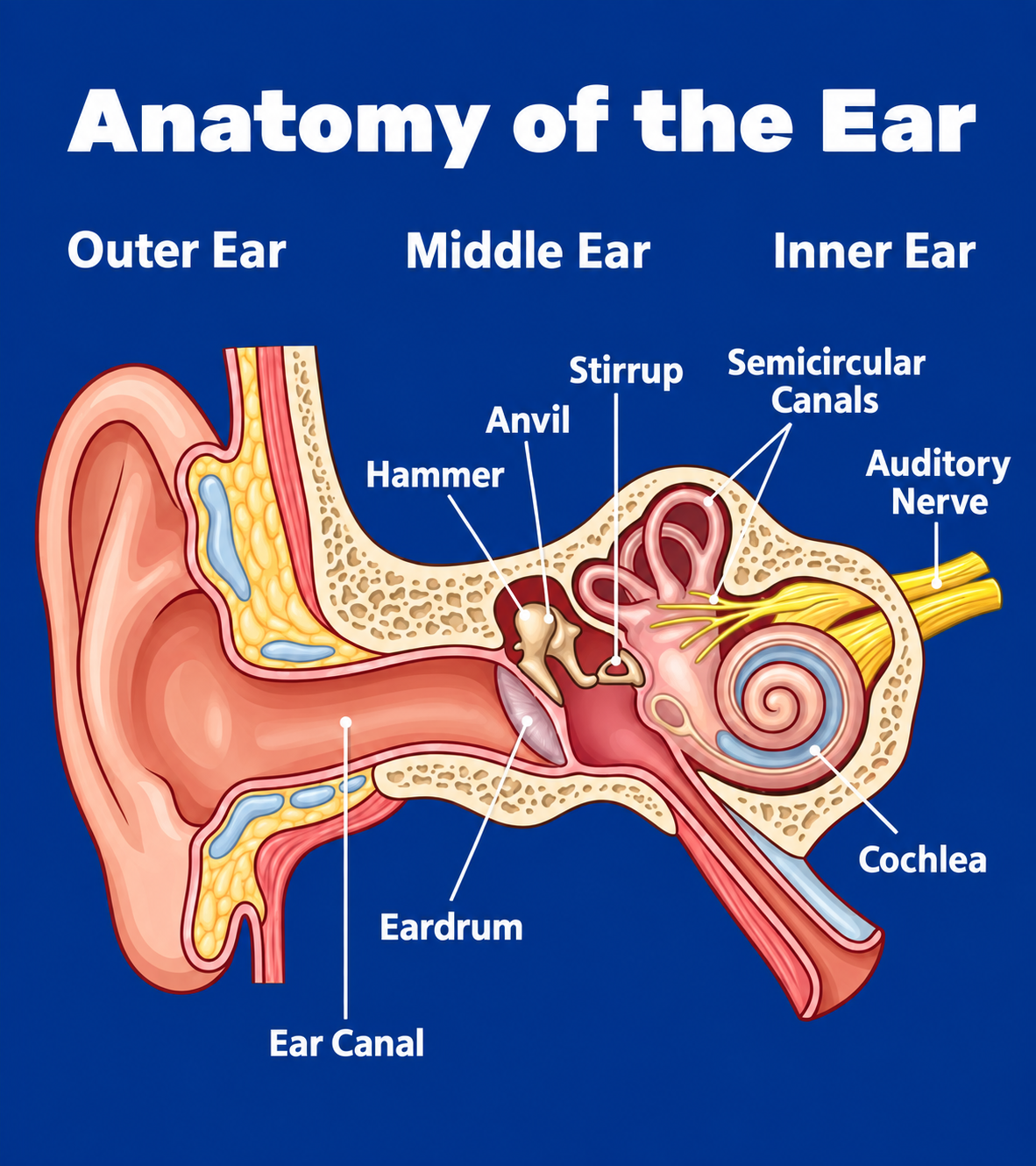
Ear care is about more than removing wax. Understanding the ear helps explain why something small inside the canal can affect hearing or cause discomfort.
How the ear works
Outer ear: The visible ear collects sound and directs it through the ear canal towards the eardrum.
Middle ear: The eardrum vibrates with sound. Three tiny bones: the hammer, anvil and stirrup: pass these vibrations towards the inner ear.
Inner ear: The cochlea converts vibrations into signals carried towards the brain by the auditory nerve. The semicircular canals help with balance.
It is not always earwax
Small objects can sometimes become lodged in the ear canal. Examples include earbud tips, hearing-aid components, beads and small toy parts. Insects can also enter the canal.
We have experience examining ears and removing suitable foreign objects under direct vision. What is appropriate depends on the object, its position and the condition of the ear. Some cases need assessment or treatment by an ENT specialist.
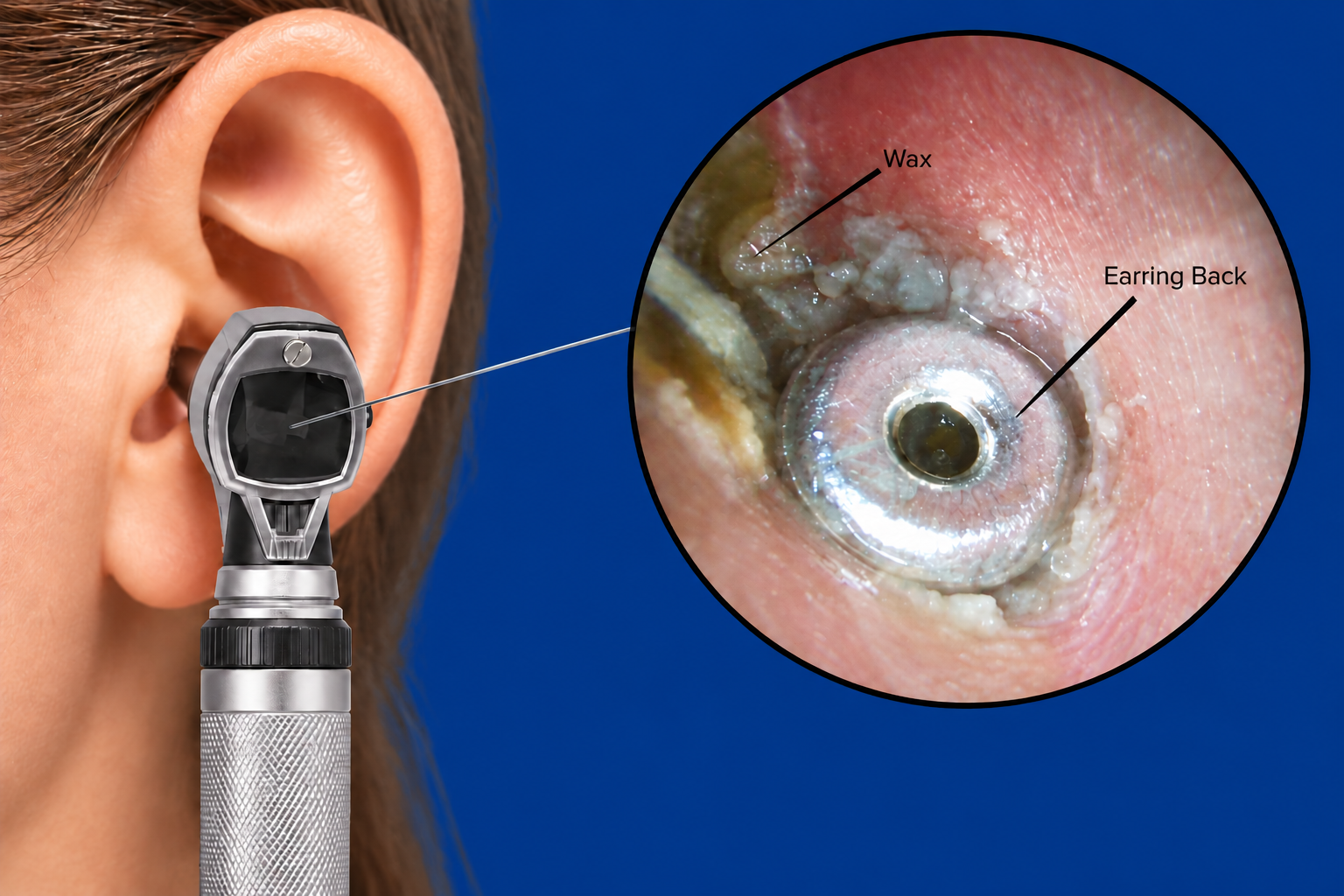
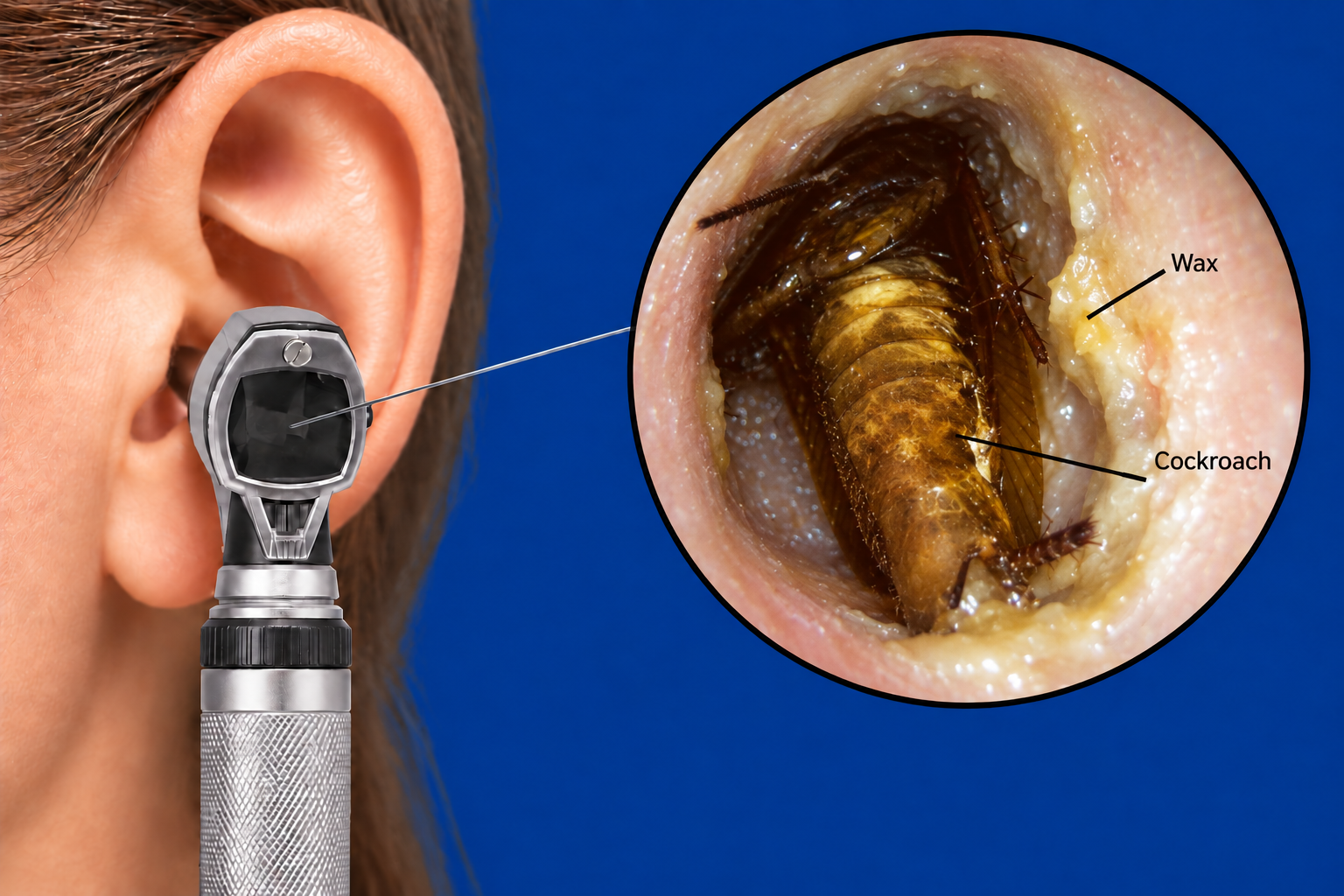
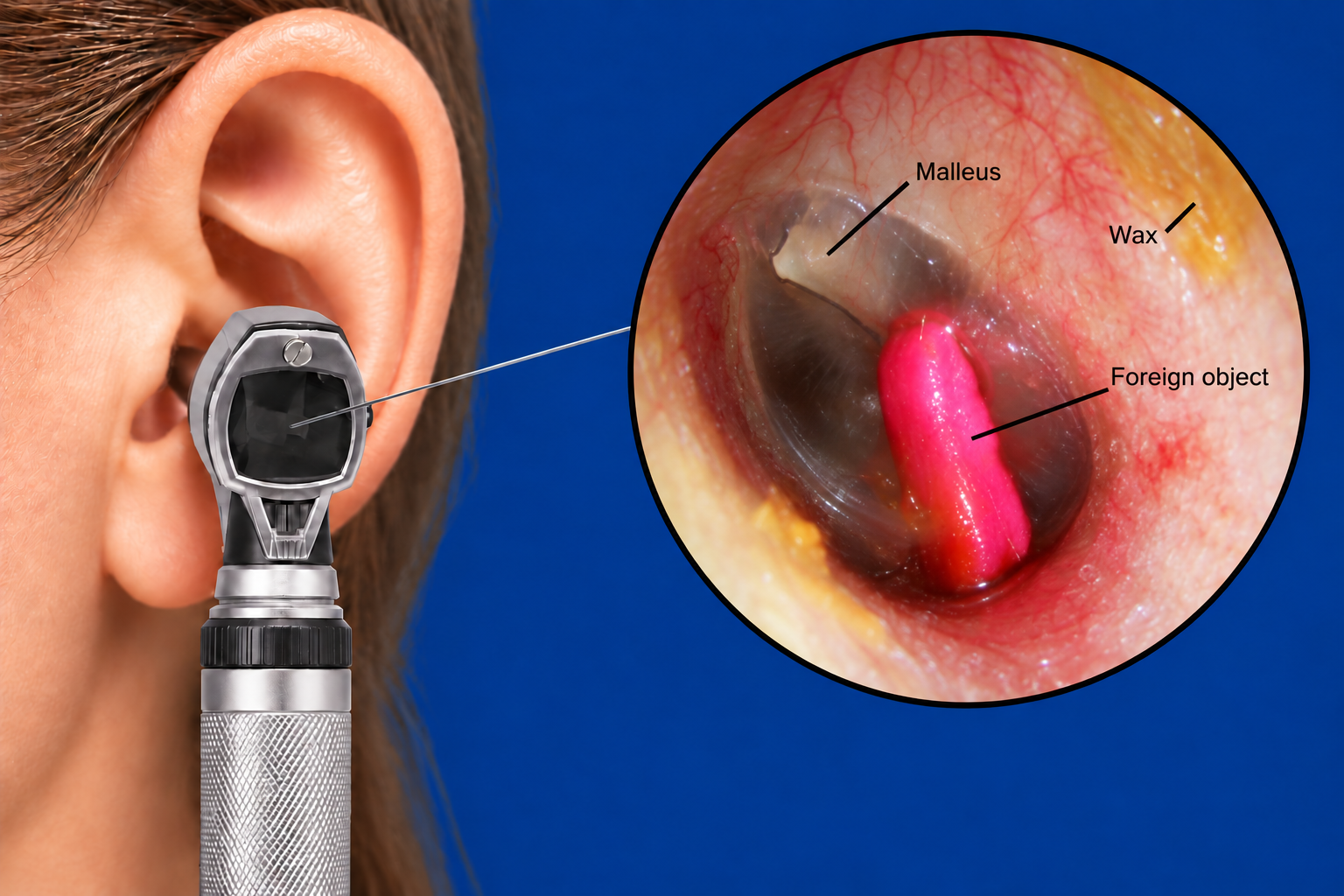
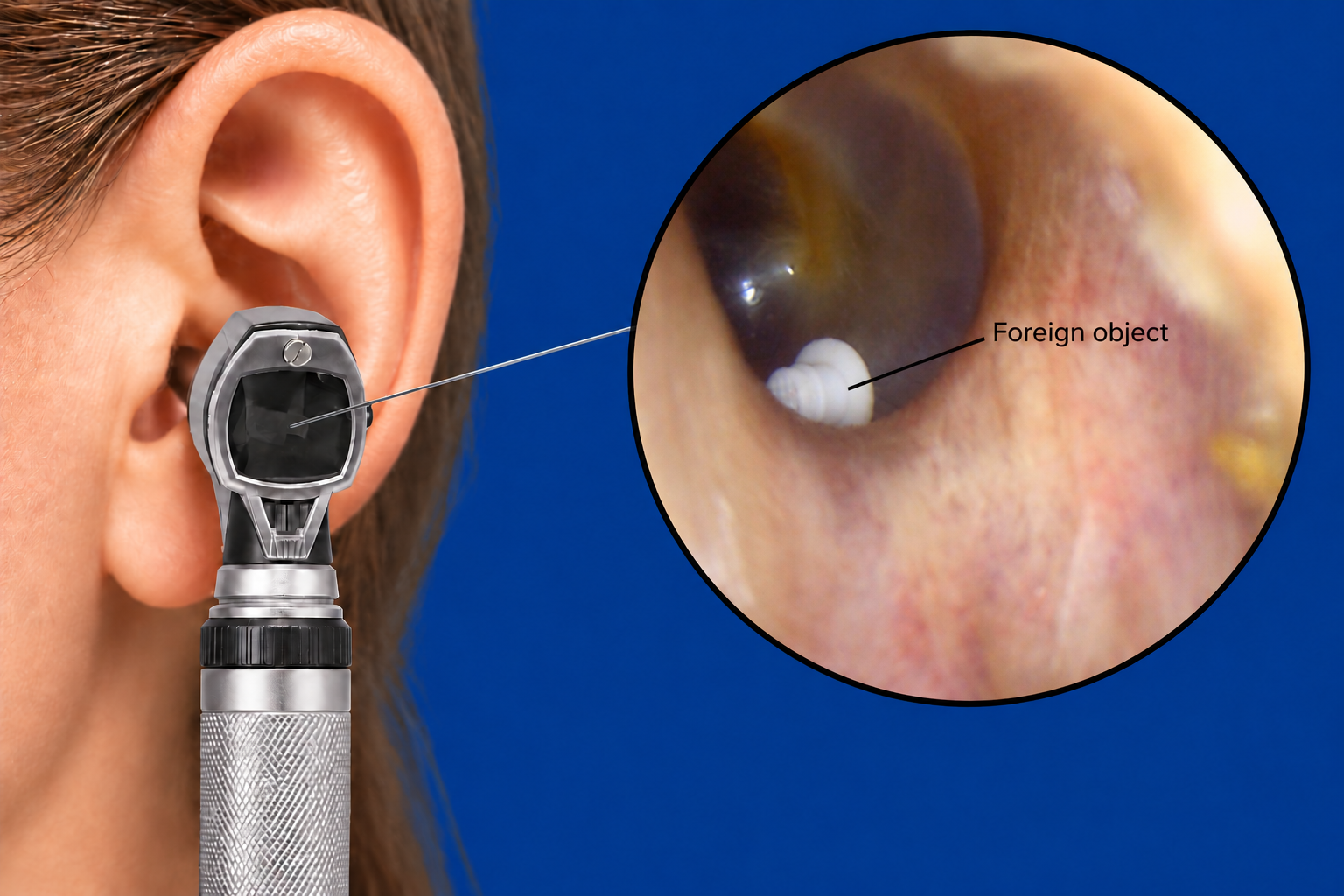
Illustrative images; not photographs of our patients.
Speak to us before booking
If you think an object is in your ear, call us to discuss whether a home assessment is appropriate. Children and complicated cases may need a different service; please call first.
If an object is firmly lodged in a child’s ear, leave it in place. Trying to remove it can push it further in. Take your child to the nearest A&E department or minor injuries unit.
Earwax appointments at home
£70 up to 10 road miles; £80 over 10 to 15 road miles; £90 over 15 to 30 road miles, travel included. Your home visit includes travel, a consultation, an ear examination and wax removal where suitable, for one clear price. If no wax is found, removal is unsuitable or removal cannot be completed, the consultation and examination fee is £35 including travel, instead of the wax-removal visit price. Payment after your visit by card or bank transfer.
Book appointment online